
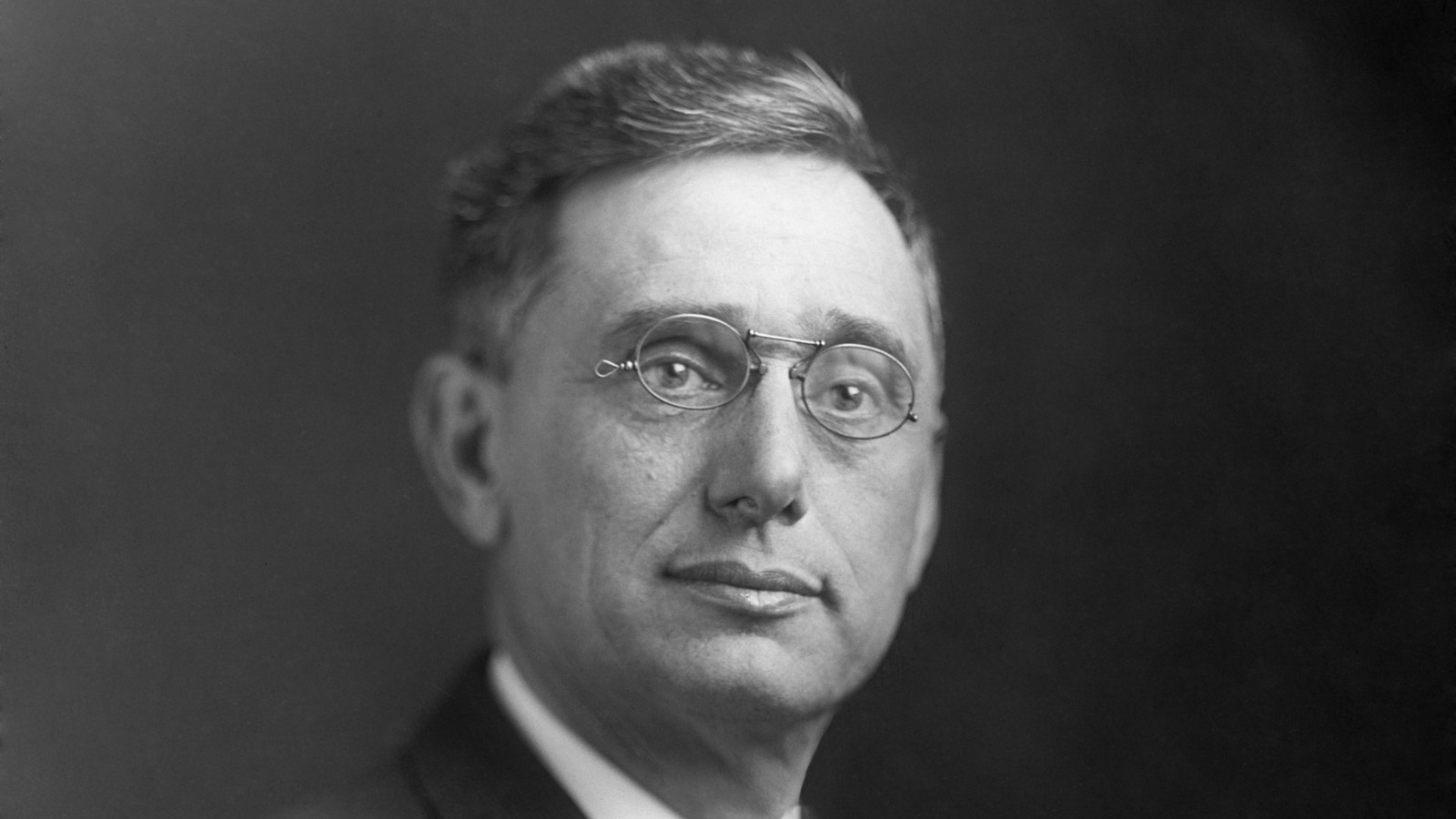
On the evening of May 4, 1905, in Phillips Brooks House at Harvard, a 48-year-old Boston lawyer named Louis Brandeis stood up before the Ethical Society to talk about the ethics of his profession. He told the students that the public had stopped looking up to lawyers, and he told them why:
It is true that at the present time the lawyer does not hold as high a position with the people as he held seventy-five or indeed fifty years ago; but the reason is not lack of opportunity. It is this: Instead of holding a position of independence, between the wealthy and the people, prepared to curb the excesses of either, able lawyers have, to a large extent, allowed themselves to become adjuncts of great corporations and have neglected the obligation to use their powers for the protection of the people. We hear much of the "corporation lawyer," and far too little of the "people's lawyer." The great opportunity of the American Bar is and will be to stand again as it did in the past, ready to protect also the interests of the people.
Louis D. Brandeis, The Opportunity in the Law (1905), reprinted in Business: A Profession.
He had been practicing what he preached for a decade by then. Born in Louisville, Kentucky on November 13, 1856, 170 years ago this week, he finished Harvard Law School in 1877 at 20, near the top of his class, clerked for Horace Gray of the Massachusetts Supreme Judicial Court, and opened a Boston practice with his law school classmate Samuel Warren. In 1890 the two of them wrote The Right to Privacy for the Harvard Law Review, the article that turned Judge Cooley's "right to be let alone" into the American law of privacy - a subject this blog has visited. (Brandeis University's archive says the article was inspired by gossip about Warren's marriage.)
The paying work made him a fortune, and the fortune paid for the other work, the work that made him the people's lawyer: the 1897 fight against the Boston Elevated Railway's monopoly on the city's busiest routes, the campaign that gave Boston a sliding scale for gas prices, the policyholders' protective committee at the Equitable Life Assurance Society, the savings bank life insurance law the governor signed in 1907, which he called his greatest achievement, and a years-long war against the New Haven railroad's hold on New England transportation. For the public matters, he took no fee. Then, because the unpaid hours were costing his partners money, he paid the firm himself for the time he spent on them.
When the National Consumers League asked him to defend Oregon's ten-hour law for women in factories and laundries before the Supreme Court, he said yes on one condition: he would appear as Oregon's counsel and argue the case himself. His sister-in-law Josephine Goldmark and her team filled 98 of the brief's 113 pages with reports and statutes, domestic and foreign, and the Court heard argument on January 15, 1908, five days after receiving it. Justice Brewer's opinion in Muller v. Oregon, upholding the law, took the unusual step of naming the lawyer: "In the brief filed by Mr. Louis D. Brandeis, for the defendant in error, is a very copious collection of all these matters."
The Brandeis brief has carried his name ever since. The statute it saved limited women's hours in the name of their supposed frailty; the method outlived the cause. Its descendants include the social science behind footnote 11 of Brown v. Board of Education and the climate scientists' brief Justice Kagan cited in her West Virginia v. EPA dissent.
On January 28, 1916, Woodrow Wilson nominated Brandeis to the Supreme Court. The president of Harvard and seven former presidents of the American Bar Association, William Howard Taft among them, opposed him, and the Senate spent four months going through his practice matter by matter.
Among the testimony was a phrase of his own. Pressed by another lawyer, in a bankruptcy matter, to say whose lawyer he was, he had answered: "I should say I was counsel for the situation." His opponents heard a conflict of interest.
On June 1, 1916 the Senate confirmed him, 47 to 22, the first Jewish justice. He sat for nearly 23 years, most memorably in dissent beside Oliver Wendell Holmes Jr., retired on February 13, 1939, and died on October 5, 1941.
Wilson had answered the committee a month before the vote, in a letter the Congressional Record printed on May 9. Chief Justice Fuller, Wilson wrote, had thought Brandeis "the ablest man who ever appeared before the Supreme Court of the United States," and "absolutely fearless in the discharge of his duties." Then came the gas campaign, the savings bank insurance law and the Boston Elevated fight, and a sentence that reads differently since last month's Ipsos chart put net trust in lawyers across 31 countries at zero: "He rendered these services without compensation, and earned, whether he got it or not, the gratitude of every citizen of the State and city he served."


