
This is the second in an occasional Zealous series exploring major legal philosophers, with the aim of demonstrating why their ideas should matter to anyone who currently practices law.
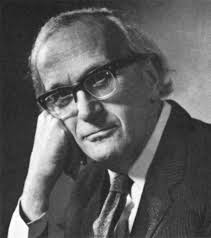
We turn now to H.L.A. Hart (pictured), the philosopher whose question Ronald Dworkin spent his career trying to answer: What is law, and does it have any necessary connection to morality?
H.L.A. Hart (1907-1992) was the most influential legal philosopher of the twentieth century. After graduating from Oxford with first-class honours in Literae Humaniores (Oxford's Classics degree, famously referred to as "Greats"), he qualified as a barrister and practiced at the Chancery Bar before World War II interrupted his career. During the war, Hart served in British intelligence (MI5), working alongside figures including Alan Turing and future MI5 Director-General Dick White. He never returned to practice, instead accepting a philosophy fellowship at Oxford, where conversations with ordinary language philosopher J.L. Austin redirected his intellectual energies toward law.
In 1952, Hart was elected to Oxford's Chair of Jurisprudence (a position established in 1869). The lectures he delivered over the next decade became The Concept of Law (1961), widely recognized as the most important work of legal philosophy published in the twentieth century. His other major works include Causation in the Law (1959, with Tony Honoré), Law, Liberty and Morality (1963), and Punishment and Responsibility (1968).
Hart resigned his chair in 1969 and was succeeded by Ronald Dworkin, who would become his most formidable critic. Hart spent his final years laboring over a response to Dworkin's attacks, published posthumously as a Postscript to the second edition of The Concept of Law (1994). That he died still wrestling with Dworkin's challenge is itself a testament to its power.
Hart's central contribution was to articulate and defend legal positivism: the view that what the law is and what the law ought to be are separate questions. Law, on this view, is fundamentally a social fact. We identify valid law not by asking whether it is just or moral, but by tracing it to recognized sources of authority: constitutions, statutes, judicial decisions. An unjust law is still a law. This is the "separation thesis," and it remains the fault line dividing legal philosophers to this day.
Hart put it with characteristic precision: legal positivism is "the simple contention that it is in no sense a necessary truth that laws reproduce or satisfy certain demands of morality, though in fact they have often done so." Note the careful phrasing. Hart wasn't denying that law and morality overlap in practice; obviously they do. He was denying that the overlap is necessary as a matter of conceptual truth. A legal system could, in principle, be thoroughly wicked and still be a legal system.
Hart wasn't naive about what this meant for judges. He understood that legal rules have what he called "open texture," a core of certainty surrounded by a "penumbra of doubt." His famous example: a rule prohibiting "vehicles" in the park clearly covers automobiles, but what about bicycles? Skateboards? A war memorial tank? In these penumbral cases, Hart argued, judges must exercise discretion, effectively making new law. They don't discover pre-existing rights; they create them. This is an honest acknowledgment that legal rules cannot anticipate every situation, and that human judgment must fill the gaps.
This was the gauntlet that Dworkin picked up. In 1967, just two years before succeeding Hart at Oxford, Dworkin published The Model of Rules in the University of Chicago Law Review. His opening salvo was unmistakable: "I want to make a general attack on positivism, and I shall use H.L.A. Hart's version as a target." Dworkin argued that Hart's picture couldn't account for how law actually works. Legal argument, Dworkin insisted, is saturated with moral reasoning. When judges decide hard cases, they don't simply "make new law" through discretion; they discover rights that were already implicit in the legal system's deeper principles. Law and morality aren't merely overlapping; they're inseparable in the very concept of what law is.
The clash that followed defined Anglo-American jurisprudence for half a century. Dworkin charged that positivism reduced law to a "model of rules" that missed how lawyers actually argue, particularly in hard cases where no rule clearly applies. Hart, he claimed, left judges free to impose their own preferences under the guise of "discretion." In Law's Empire (1986), Dworkin went further, arguing that law is fundamentally an "interpretive" enterprise, not just a collection of statutes or precedents, but rather a coherent, single scheme of principles that elevates the concept of equality as supreme (similar to and consistent with John Rawls' Veil of Ignorance).
In every hard case, there is one right answer waiting to be discovered by a judge who properly weighs the community's principles of justice and fairness. He even invented a mythical superhero judge, "Judge Hercules" -- imbued with perfect knowledge and infinite patience, to illustrate how the right answer could theoretically be found.
Hart pushed back.
In his posthumous Postscript, he acknowledged Dworkin's contribution with characteristic precision: "Much credit is due to Dworkin for having shown and illustrated the importance of legal principles and their role in legal reasoning." But this was clarification, not capitulation. Hart flatly rejected Dworkin's characterization of his theory: "I certainly did not in my use of the word 'rule' claim that legal systems comprise only 'all or nothing' standards." More fundamentally, Hart argued that even when moral principles determine legal outcomes, they do so because social practice (Hart's Rule of Recognition) has identified them as legally valid, not because law and morality are conceptually fused. The source of their authority remains social fact, not moral truth.
This is no minor technical point; it preserves the core of legal positivism even while accommodating Dworkin's observations about how lawyers argue. Most jurisprudence scholars today regard Hart's framework as having survived Dworkin's assault largely intact, and The Concept of Law remains the starting point for legal philosophy education worldwide.
Why should practicing lawyers care? Because you are taking a position in this debate every time you walk into a courtroom. When you argue that a contract is unenforceable because it shocks the conscience, you're invoking a moral principle that you claim is already embedded in the law. When you argue that a statute's plain text controls regardless of its harsh consequences, you're treating law as a system of rules that can be identified without moral evaluation. When opposing counsel accuses you of "legislating from the bench" or "ignoring what the law clearly says," they're invoking this Hart vs. Dworkin debate.
The practical stakes are highest in constitutional litigation. Originalists who insist that constitutional meaning was fixed at ratification are Hart's heirs, treating the Constitution as a set of rules whose content is determined by historical social facts, not evolving moral insight. Living constitutionalists who argue that "equal protection" or "cruel and unusual punishment" must be interpreted in light of contemporary moral understanding are Dworkin's. The debate isn't academic; it determines outcomes in cases about abortion, affirmative action, marriage equality, and the scope of executive power.
Hart gave us the clearest statement of what it would mean for law to be a self-contained system of rules. Dworkin showed why that picture might be inadequate to our actual legal practices. Between them, they framed the question every serious lawyer eventually confronts: When you argue about what the law requires, are you arguing about social facts, moral truths, or something irreducibly intertwined?
Next in this series: Lon Fuller and yet another clash of titans. Before Dworkin picked up the gauntlet, Hart faced an earlier challenger who insisted that law, by its very nature, embodies a morality of its own. Their 1958 exchange in the Harvard Law Review remains one of jurisprudence's legendary battles.


