
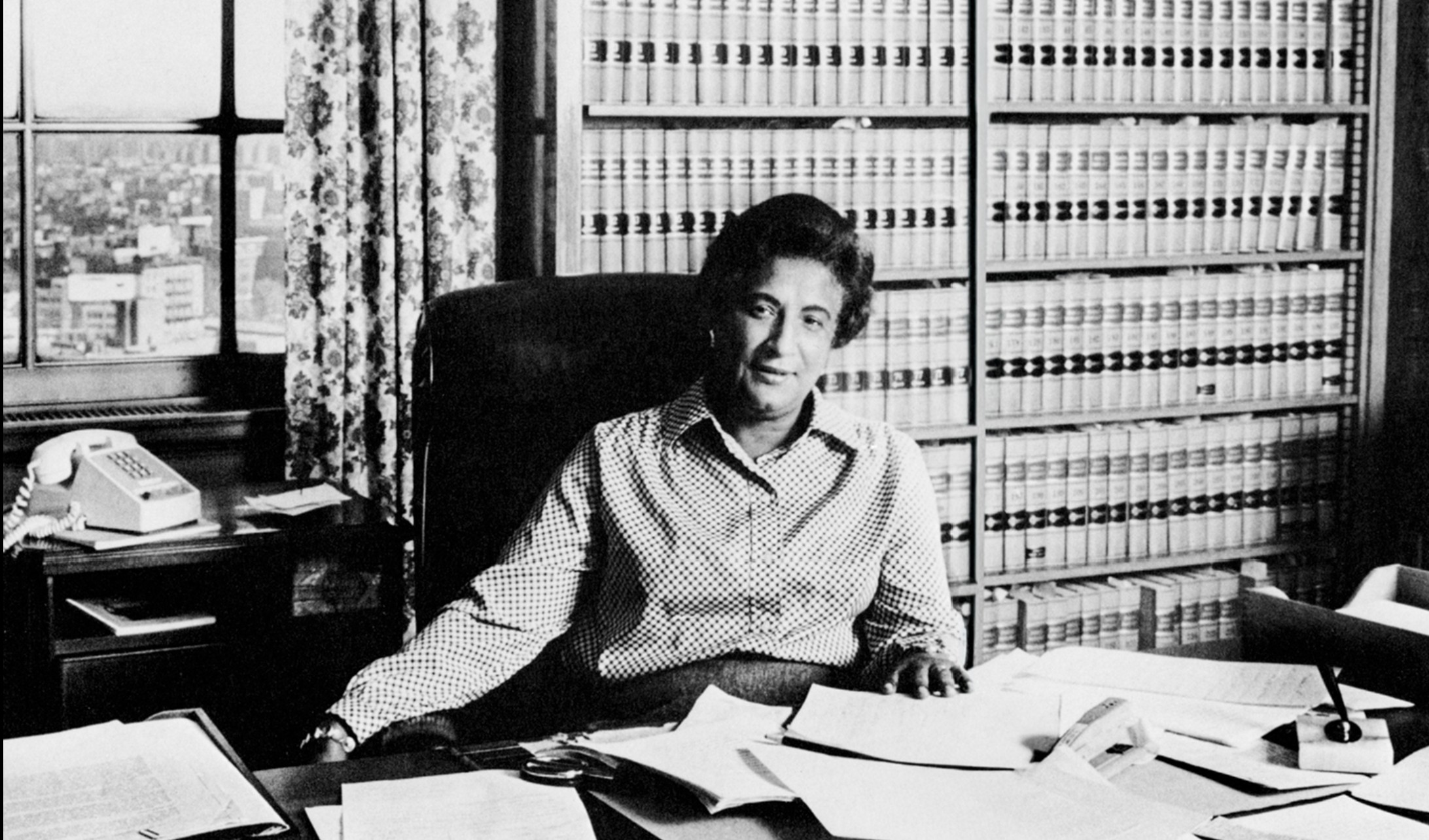
Before Constance Baker Motley was the first Black woman to sit on the federal bench, she was the lawyer the segregationists least wanted to see walk into their courtroom.
Motley spent two decades as a front-line litigator for the NAACP Legal Defense and Educational Fund, where Thurgood Marshall hired her as the organization's first female attorney while she was still finishing at Columbia Law School. She was the only woman on the LDF team that wrote the briefs in Brown v. Board of Education. She then spent years turning Brown from a principle into admissions letters, courtroom by hostile courtroom.
She argued ten cases before the United States Supreme Court and won nine. That is a record most appellate specialists who do nothing else for a living never approach, and Motley compiled it while also trying cases in the trial courts of the Deep South, where the danger was not losing a motion but the drive back to the hotel.
Her most famous client was James Meredith. When Mississippi refused to admit a qualified Black applicant to its state university, Motley took Meredith v. Fair through the federal courts, up to the Fifth Circuit and back, against a state that deployed everything from delay tactics to a governor physically blocking the door. Meredith enrolled at Ole Miss in 1962 under the protection of federal troops. She had already forced open the University of Georgia, and her university victories reached across the South. She also desegregated lunch counters, parks, and pools, and defended the right to protest peacefully, including representing Martin Luther King, Jr.
By 1964 the Norfolk Journal and Guide had dubbed her the "Civil Rights Queen." Her LDF colleague Jack Greenberg put it more plainly: "When she got ahold of a case, pity the lawyer on the other side."
She left litigation for the New York State Senate, then the Manhattan Borough Presidency, and in 1966 President Johnson appointed her to the Southern District of New York, where she served until her death in 2005.
Accepting her own Supreme Court nomination in 2022, Ketanji Brown Jackson, who shares Motley's birthday, said it plainly: "Today, I proudly stand on Judge Motley's shoulders, sharing not only her birthday, but also her steadfast and courageous commitment to equal justice under law."


